
Overview
Fast is a distributed settlement protocol designed for parallel claim processing at internet speed.
It is inspired by blockchains, but built to overcome their core performance limitation: global consensus and sequential execution. Fast does not require validator-to-validator communication, consensus rounds, or a globally enforced transaction order.
Instead, it enables independent, parallel validation while preserving security and correctness.
Not just another blockchain
Section titled “Not just another blockchain”Fast shares some characteristics with blockchains. It is decentralized. It is permissionless. It relies on cryptographic verification.
But it does not operate like a traditional chain.
Blockchains maintain a single globally ordered ledger. Every transaction must be placed into one total sequence agreed upon by the network. This guarantees consistency, but it introduces coordination overhead and limits throughput.
In a blockchain:
- Transactions are broadcast to the network
- Nodes run a consensus algorithm
- A global order is established
- All nodes append transactions in the same sequence
This global coordination step is the bottleneck.
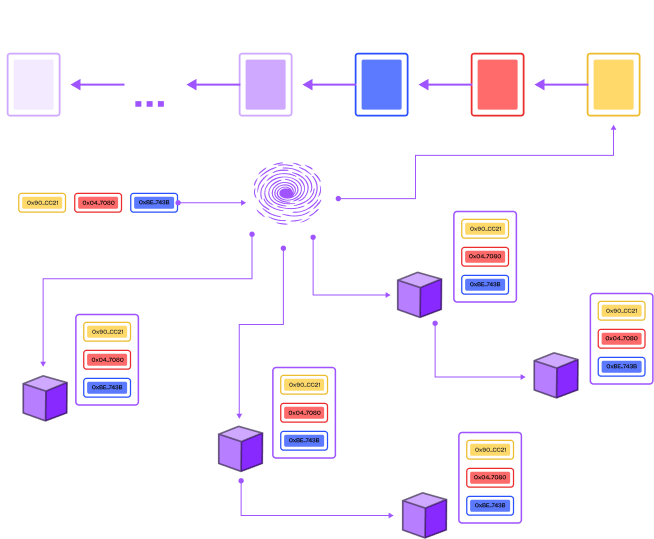
Figure 1: Blockchain consensus, an oversimplified view.
Figure 1 depicts blockchain consensus.
Transactions (colored stripes) are submitted to the network, blue first and yellow last. Once accepted by the consensus algorithm (vortex), they become blocks settled on the chain (rectangles at the top, with genesis block depicted as light purple). Transactions are also propagated to all the nodes in the network (purple boxes) which append them to their local copy of the blockchain in the same order (transaction stack, with bottom transaction being processed first).
So, how is Fast different?
Section titled “So, how is Fast different?”Fast, instead, does not enforce a global order on transaction processing, nor does it require its nodes to communicate with each other to propagate the global state change.
Fast nodes, which we call validators, use and maintain their own local state. They verify, validate, and settle the claims in an optimal way: independently and in parallel with any other claim.
Since validators do not communicate with each other, there is no consensus in the strict sense of the word as used in blockchains. More specifically, Fast is not strongly consistent, but it is strongly eventually consistent, due to the requirement on claims to be weakly independent.
.png)
Figure 2: Fast consensus, an oversimplified view.
Figure 2 depicts Fast consensus.
Transactions (colored stripes) are submitted to the network, blue first and yellow last. Once validated by the network (vortex), transactions are processed in the order they are received by the validators (purple boxes). This order is represented by the transaction stack, with the bottom transaction being processed first, and may not be the same on all nodes.
Due to this processing order flexibility, Fast enables different kinds of decentralized applications, such as payments, verifiable computation, digital identity, or voting, through an infrastructure which:
- achieves high throughput and scalability with massively parallel settlement
- ensures decentralization through validators which are independent and deterministic
- avoids global consensus overhead while still ensuring safety and correctness.
Whether you’re building in Web3, Web2.5, or working with oracles, appchains, or AI agents, Fast gives you a programmable, verifiable foundation for decentralized logic and settlement.
What’s next?
Section titled “What’s next?”- Fast protocol → Get a detailed overview of Fast protocol and its settlement process.
- Core concepts → Familiarize yourself with key concepts in Fast such as weak independence and claims.
- Developers → Dive deep into the inner-workings of our implementation of Fast and get accustomed with our APIs.
- Applications → Discover current applications built on Fast.
- FAQ → Check out the most frequently asked questions.